
We are a professional review company that receives compensation from companies whose products we review. We test each product thoroughly and give high marks only to the ones that are the very best. We are independently owned, and the opinions expressed here are our own.
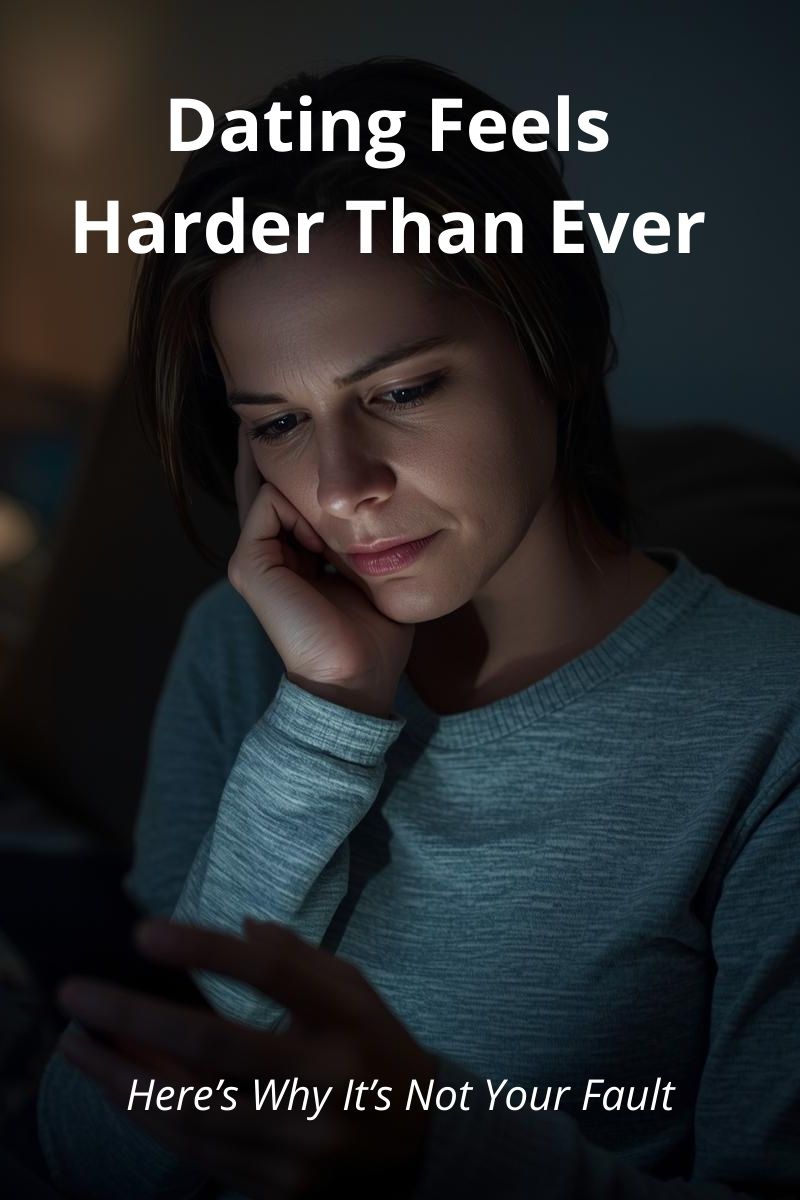
If you’ve ever caught yourself thinking “Is it just me?” after yet another disappointing date, awkward conversation, or silent, unmatched chat — you’re not alone. And more importantly: you’re probably not the problem.
Dating in 2026 feels exhausting, confusing, and emotionally draining for many people. Not because people suddenly forgot how to connect — but because the environment around dating has fundamentally changed.
The reason dating feels harder in 2026 is simple: the structure of modern dating no longer supports how humans naturally build attraction, trust, and emotional connection.
Something important has gone missing. And once you see it, a lot of your frustration starts to make sense.
Dating Isn’t Hard Because You’re Doing It Wrong
Let’s get this out of the way early.
Dating today is not difficult because:
- you’re too picky
- you’re not attractive enough
- you said the wrong thing
- you didn’t text at the right time
That narrative is convenient — especially for platforms that profit from keeping you searching — but it’s incomplete.
Dating feels hard in 2026 because the structure of dating no longer supports natural human connection.
And humans are very good at sensing when something is off, even if they can’t articulate it yet.
What Dating Used to Do (That It Doesn’t Anymore)
Dating didn’t always feel like this.
Not because the past was perfect — it wasn’t — but because dating used to do three things reasonably well:
- It slowed things down
- It created emotional momentum
- It allowed attraction to unfold gradually
Today, dating often does the opposite.
It speeds everything up.
It fragments attention.
It interrupts emotional continuity before anything meaningful can form.
Connection used to be the default direction.
Now, disconnection is.
It’s one of the reasons why dating feels harder overall.
Why Dating Apps Changed Everything (And Not in a Good Way)
Dating apps didn’t ruin dating overnight. They changed it quietly, structurally, and in ways that weren’t obvious at first.
At scale, dating apps introduced three major shifts:
1. Dating Became an Evaluation Process, Not an Experience
Instead of meeting someone, you now assess profiles.
Tiny decisions. Endless comparisons. Constant judgment — both of others and of yourself.
When dating becomes evaluation-heavy, people stop being present. They start performing.
And performance kills vulnerability.
While many men experience this shift as performance pressure, women often experience it differently.
2. Optionality Replaced Emotional Investment
When you know there’s always “someone else one swipe away,” the subconscious incentive to work through discomfort disappears.
Why sit with uncertainty?
Why lean into emotional friction?
Why stay curious when disengaging is easier?
This doesn’t make people bad.
It makes them human.
3. The Feedback Loop Became Inconsistent
Sometimes you get matches.
Sometimes you don’t.
Sometimes there’s intense interest.
Sometimes silence.
That inconsistency trains your nervous system to stay alert, guarded, and slightly anxious.
Dating stops feeling like exploration.
It starts feeling like emotional roulette.
Why Dating Feels So Emotionally Draining Now
One of the most overlooked reasons dating feels hard in 2026 is emotional fatigue.
Not heartbreak.
Not rejection.
Fatigue.
People aren’t walking away from dating because they don’t want love — they’re walking away because they’re tired of feeling:
- disposable
- replaceable
- unseen
- emotionally unsafe
When effort isn’t met with clarity, the brain starts conserving energy.
Pulling back becomes a form of self-protection.
“Why Does Everyone Feel So Distant?”
This is one of the most common questions people ask — and it’s a fair one.
The distance you’re feeling isn’t apathy.
It’s overexposure combined with emotional overload. (hub C)
When people interact with too many potential connections at once, depth suffers.
Emotional presence becomes rare — not because people don’t care, but because they don’t have enough internal bandwidth left.
Why Dating Is Harder for Emotionally Aware People
Ironically, dating feels hardest for people who:
- want something real
- value emotional depth
- are self-reflective
- don’t enjoy surface-level interactions
Because the modern dating environment rewards speed, novelty, and detachment — not consistency, curiosity, or emotional attunement.
If dating feels draining to you, that may actually be a sign of healthy emotional wiring trying to operate in an unhealthy system.
The Problem Isn’t Commitment — It’s Emotional Safety
A lot of people say, “No one wants commitment anymore.”
That’s not entirely true.
People want emotional safety before commitment — and dating today rarely provides it.
Emotional safety comes from:
- predictability
- mutual effort
- clear interest
- felt presence
When these are missing, people hesitate. They pull back. They keep options open.
Not because they don’t care — but because their nervous system doesn’t feel settled.
Why Dating Apps Don’t Teach You How to Connect
Here’s the uncomfortable truth:
Dating apps are excellent at introducing people, but terrible at helping them connect.
They don’t teach:
- how attraction develops
- how emotional bonds form
- how desire grows through safety and polarity
So people assume something is wrong with them when connections fade — instead of recognizing that the system doesn’t support depth.
Why Dating Feels Harder in 2026 Than Ever Before
By 2026, most people have:
- been ghosted
- been breadcrumbed
- been led on
- been emotionally invested with no closure
Each experience leaves a small imprint.
Over time, those imprints add up — making people more cautious, less expressive, and quicker to disengage.
Dating hasn’t become impossible.
It’s become emotionally heavier.
Is Dating Actually “Dead”?
No.
But casual, frictionless, effortless dating?
That version is fading.
What’s emerging instead is a quieter split:
- people who continue playing the app-driven game
- and people who step back to rebuild connection differently
The future of dating won’t belong to the loudest or most optimized profiles.
It will belong to people who understand how emotional connection actually works — and who stop outsourcing attraction to systems that were never designed to create it.
Why This Isn’t Your Fault
If dating feels confusing, draining, or discouraging — that doesn’t mean you’re broken.
It means you’re responding appropriately to an environment that’s misaligned with how humans bond.
And once you stop blaming yourself, something shifts.
You stop chasing.
You stop overcorrecting.
You stop trying to “hack” attraction.
You start reconnecting — with yourself first, and then with others.
Where This Goes Next
Understanding why dating feels hard is the first step.
The next step is learning:
- what actually creates emotional connection
- why attraction fades (and how it can return)
- how to engage without burning out
That’s where things start to change — not by doing more, but by doing what actually works with human psychology.
Dating in 2026 isn’t about trying harder.
It’s about reconnecting smarter.
Rickard


What do you think about the article you've just read? Please tell me below.