
We are a professional review company that receives compensation from companies whose products we review. We test each product thoroughly and give high marks only to the ones that are the very best. We are independently owned, and the opinions expressed here are our own.
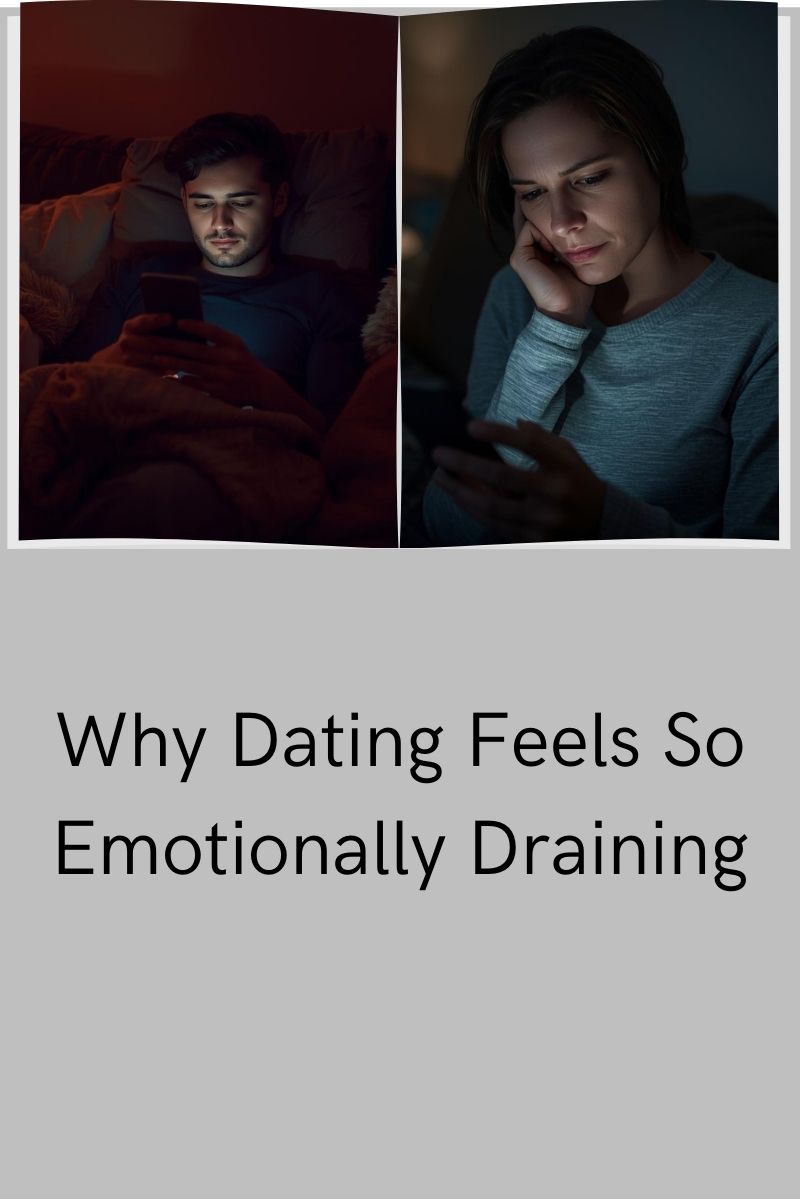
If dating leaves you feeling more tired than hopeful, you’re not imagining it.
For many people in 2026, dating isn’t just frustrating.
It’s emotionally draining.
You can walk away from a date feeling:
- uncertain
- overstimulated
- slightly rejected
- strangely empty
Even when nothing “bad” happened.
So what’s going on?
Micro-Rejections Add Up
Modern dating is filled with small emotional disruptions:
- conversations that fade
- plans that stall
- interest that cools without explanation
- enthusiasm that isn’t matched
Each one is minor on its own.
But repeated unpredictability forces your nervous system into a low-level state of vigilance.
You start bracing.
Not dramatically.
Just subtly.
And subtle guarding is exhausting.
Emotional Investment Without Stability
Dating requires openness.
But modern dating often lacks continuity.
You might:
- share personal stories
- build early excitement
- imagine potential
Only for the dynamic to shift by a few days.
When investment outpaces stability, the emotional system doesn’t feel safe.
And when safety feels inconsistent, the body conserves energy.
That conversation can feel like numbness.
Or fatigue.
Why It Feels Personal
When dating drains you repeatedly, it’s easy to conclude:
- I’m too sensitive.
- I’m choosing wrong.
- Maybe I’m not cut out for this.
But much of the exhaustion isn’t personal failure.
It’s structural friction.
Dating environments built around speed and optionality tend to fragment emotional pacing.
If you want a broader breakdown of why dating feels harder overall, I explore that structural shift in another article on this blog.
The Nervous System Component
Emotional drain isn’t just psychological.
It’s physiological.
When outcomes feel unpredictable, your nervous system increases vigilance.
That means:
- more mental scanning
- more second-guessing
- more emotional buffering
Over time, that background tension depletes energy.
If you’re curious how modern dating platforms amplify that effect neurologically, I go deeper into that in another article.
Sometimes It’s About Timing
There’s another layer people often miss.
Dating amplifies your current emotional baseline.
If you’re already:
- recovering from a breakup
- managing stress
- rebuilding confidence
Dating can magnify that instability.
In those cases, the exhaustion isn’t about effort — it’s about readiness.
If you’ve been questioning whether now is the right time to date at all, that reflection matters more than most advice admits.
What Actually Helps
Instead of trying to push through emotional drain, it often helps to:
- reduce parallel conversations
- slow pacing intentionally
- prioritize consistency over intensity
- choose environments with repeated exposure
Energy returns when predictability increases.
Connection deepens when guarding softens.
Final Thought
If dating feels emotionally draining, it doesn’t automatically mean you’re incapable of connection.
It may simply mean your nervous system is responding to unpredictability.
And that response makes sense.
Dating isn’t supposed to feel like chronic effort.
It’s supposed to feel gradually stabilizing.
If it doesn’t, that information is worth paying attention to.
Rickard



What do you think about the article you've just read? Please tell me below.