
We are a professional review company that receives compensation from companies whose products we review. We test each product thoroughly and give high marks only to the ones that are the very best. We are independently owned, and the opinions expressed here are our own.
If you’ve ever been to the dentist, you’ve probably heard the terms plaque and tartar used almost interchangeably. While they’re closely related, they aren’t the same thing.
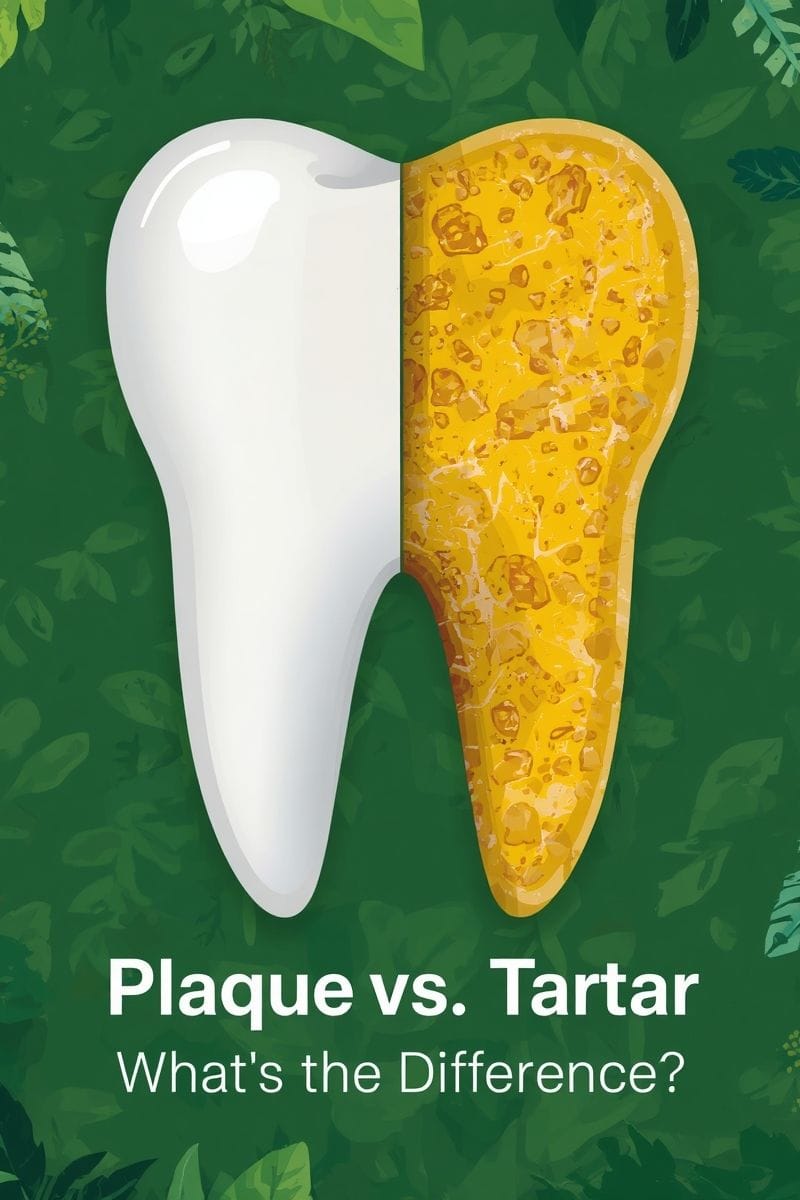
Dental plaque is a soft, sticky biofilm that forms on your teeth every day. Tartar, also called dental calculus, is plaque that has hardened over time and can no longer be removed with brushing alone.
Understanding the difference can help you protect your teeth, gums, and overall oral health.
What Is Dental Plaque?
Plaque is a soft, nearly invisible biofilm made up of bacteria, saliva, and tiny food particles.
It begins forming just hours after brushing your teeth and is a completely natural part of your mouth’s ecosystem.
Although plaque is normal, allowing it to accumulate can increase the risk of tooth decay, gum disease, and bad breath.
If you want to know more, here’s what plaque on teeth actually is.
What Is Tartar?
Tartar is hardened plaque.
When plaque remains on your teeth for too long, minerals in your saliva gradually cause it to calcify.
Once this happens, tartar becomes firmly attached to the tooth surface.
Unlike plaque, tartar generally cannot be removed with brushing or flossing and usually requires professional dental cleaning.
Plaque vs. Tartar: Side-by-Side Comparison
| Dental Plaque | Tartar |
|---|---|
| Soft and sticky | Hard and rough |
| Forms every day | Forms over time if plaque isn’t removed |
| Usually colorless | Often yellow or brown |
| Can be removed by brushing and flossing | Usually requires professional cleaning |
| Contains living bacteria | Provides a rough surface where more plaque can accumulate |
How Does Plaque Turn Into Tartar?
The process is surprisingly simple.
Step 1
A thin layer of plaque forms naturally after brushing.
Step 2
If plaque isn’t disrupted through brushing and flossing, it becomes thicker.
Step 3
Minerals found naturally in saliva begin hardening the plaque.
Step 4
Over time, the plaque calcifies and becomes tartar.
Once tartar has formed, it becomes much harder to remove at home.
Is Plaque Worse Than Tartar?
Neither is “better.”
Plaque is the starting point.
Tartar is what happens when plaque is left undisturbed.
The main concern with tartar is that its rough surface makes it easier for additional plaque to stick to the teeth, creating an ongoing cycle that may increase the risk of gum disease.
Tartar might be the cause of bleeding gums, but it’s not the only explanation, as I explain in that article.
Can You Remove Plaque at Home?
Yes.
Most plaque can be removed through consistent daily oral hygiene.
Helpful habits include:
- Brushing twice daily
- Cleaning between the teeth
- Staying hydrated
- Limiting frequent sugary snacks
- Supporting a healthy oral microbiome
If you want a more detailed explanation, our article about how to remove dental plaque at home might be a good start to read after you finish this one.
Can You Remove Tartar at Home?
Unfortunately, no.
Once plaque hardens into tartar, brushing alone is usually no longer enough.
Professional dental cleanings use specialized instruments to safely remove tartar while protecting the tooth surface.
Trying to scrape tartar off yourself can damage your teeth or gums.
How to Prevent Both Plaque and Tartar
The good news is that preventing tartar starts with preventing plaque.
Simple daily habits include:
- Brush your teeth twice each day.
- Floss or use interdental brushes.
- Drink enough water.
- Eat a balanced diet.
- Visit your dentist for regular cleanings.
- Support a healthy oral microbiome.
Key Takeaways
- Plaque is a soft biofilm that forms naturally every day.
- Tartar is hardened plaque.
- Plaque can usually be removed at home.
- Tartar generally requires professional cleaning.
- Preventing plaque is the best way to prevent tartar.
Frequently Asked Questions
Is tartar the same as plaque?
No. Tartar is plaque that has hardened due to minerals in saliva.
How long does it take for plaque to become tartar?
Plaque can begin hardening within 24–72 hours if it isn’t removed, although the exact timing varies between individuals.
Can brushing remove tartar?
No. Brushing removes plaque but generally cannot remove tartar once it has hardened.
Is tartar dangerous?
Tartar itself isn’t a disease, but it provides an ideal surface for plaque to accumulate, increasing the risk of cavities and gum disease.
Does everyone get tartar?
Most people develop some tartar over time, but good oral hygiene and regular professional cleanings can greatly reduce buildup.
Does the oral microbiome affect plaque?
Yes. A balanced oral microbiome helps keep harmful bacteria under control and supports a healthier oral environment.
Final Thoughts
Plaque and tartar are closely connected, but understanding the difference is the first step toward better oral health.
Plaque forms naturally every day and can usually be removed with good daily habits. Tartar develops when plaque is left behind long enough to harden, making professional removal necessary in most cases.
If you’d like to learn more about the bacteria that influence plaque formation, be sure to read our complete guide to the oral microbiome. It explains why maintaining a balanced community of beneficial bacteria may be just as important as keeping your teeth clean.
Know someone who might find this helpful? Feel free to share this article using the buttons below.
Rickard



What do you think about the article you've just read? Please tell me below.