
We are a professional review company that receives compensation from companies whose products we review. We test each product thoroughly and give high marks only to the ones that are the very best. We are independently owned, and the opinions expressed here are our own.
Please note: This article contains only links to relevant government agencies and internal resources on this website. All links are displayed in bold red text throughout the article. AI was used to help correct the grammar and generate the images.
There was a time when spotting an online romance scam seemed relatively simple.
Look for bad grammar.
Reverse-image search the profile photo.
Ask to speak on the phone.
Request a video call.
If the person kept refusing, something was probably wrong.
Those precautions can still be useful.
But artificial intelligence is changing what a convincing fake identity can look and sound like.
A photograph no longer needs to be stolen from a real person.
A message doesn’t need to contain obvious grammatical mistakes.
A voice on the phone may not prove who is speaking.
And even video deserves more scrutiny than it once did.
That doesn’t mean you should distrust everyone you meet online.
It means some of the old shortcuts for deciding whether someone is real are becoming less reliable.
AI doesn’t necessarily create an entirely new romance scam. It can make an old one much more convincing.
That’s one reason romance scams can still use remarkably similar scripts even as the technology becomes more sophisticated.
What Is an AI Romance Scam?
An AI romance scam is a romance scam in which artificial intelligence is used to help create, maintain, or strengthen a false identity or relationship.
The underlying goal may be familiar.
A scammer builds trust with someone online, develops an emotional relationship, and eventually uses that relationship to obtain money, personal information, access to accounts, investments, or some other benefit.
AI can potentially help at several stages:
- Creating profile photographs
- Generating additional images of the same fictional person
- Writing convincing messages
- Translating conversations
- Mimicking someone’s writing style
- Generating or cloning voices
- Manipulating photographs
- Producing or altering video
- Creating fake documents
- Maintaining multiple conversations
The FBI has specifically warned that criminals are using generative AI in romance scams to improve translations and create convincing photographs, profiles, and videos.
The scam itself may still follow patterns that have existed for decades or even centuries.
What changes is the evidence the scammer can show you.
1. The Person in the Profile Photo May Not Exist
Stolen photographs have long been a staple of romance scams.
A scammer finds photographs of an attractive stranger, creates a new profile, and pretends to be that person.
That creates a vulnerability for the scammer:
The original photographs may be discoverable.
A reverse-image search might reveal the same face on another Facebook profile, an Instagram account, a military website, a modeling page, or dozens of scam profiles under different names.
Generative AI changes that.
A scammer can use an image of a person who never existed.
There may be no original Instagram account.
No real soldier had their identity stolen.
No model.
No innocent person waiting to be discovered through reverse-image search.
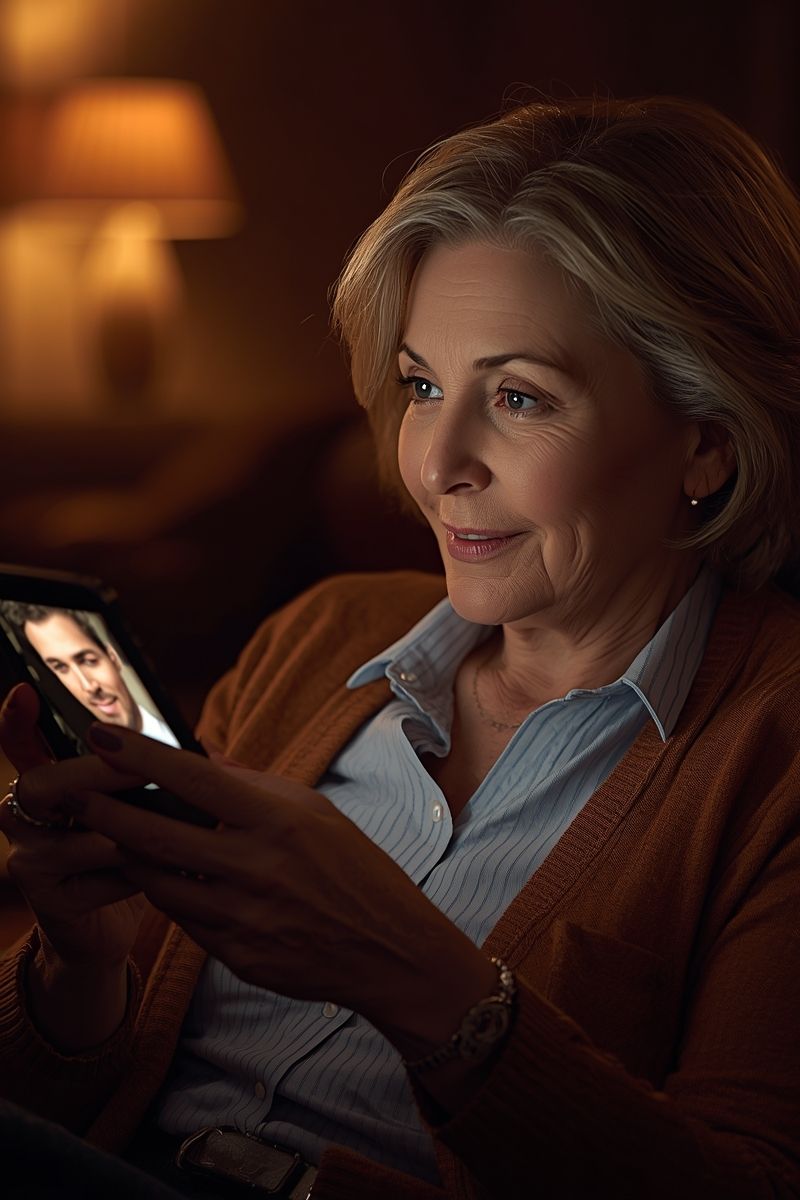
The face itself may be synthetic — like the person in the image below, who does not exist.

Does That Make Reverse-Image Search Useless?
No.
You should still use it.
Many scammers continue to steal photographs of real people, and reverse image search can reveal important contradictions.
But:
“I couldn’t find the photo anywhere else” is no longer proof that the person is genuine.
The absence of a match only means your search didn’t find another copy.
It doesn’t tell you how the image was created.
This isn’t only a hypothetical future risk. According to the FBI’s 2025 Internet Crime Report, victims reported more than $19 million in losses from confidence and romance scams with a likely AI connection.
2. AI Can Create More Than One Convincing Photograph
One photograph is easy to fake.
So perhaps you ask for another.
Then another.
Maybe you want to see them in a more casual setting rather than in a professional-looking profile picture.
Historically, this could make life harder for someone using a limited collection of stolen photographs.
Generative AI can potentially reduce that problem.
A fictional identity may be supported by multiple images that appear to show the same person in different situations.
At home.
Outside.
On vacation.
Wearing different clothes.
In different settings.
That can create the impression of a real photographic history.
And the technology will continue improving.
The lesson isn’t that every unusual photograph is AI-generated.
It’s that quantity of photographs isn’t the same thing as independent verification.
3. Good Grammar Doesn’t Mean You’re Talking to a Real Person

The badly written scam email became an internet stereotype for a reason.
Strange grammar.
Unusual capitalization.
Odd phrases.
Inconsistent spelling.
For years, those mistakes were treated as warning signs.
Sometimes they still are.
But imagine a scammer who isn’t fluent in English.
They no longer necessarily need to write directly to you in English.
They can write in their own language and use AI-assisted translation.
Our history of Nigerian romance scams and 419 fraud shows just how much the technology behind these schemes has changed.
They can ask AI to make a message sound:
more natural,
more affectionate,
more American,
more professional,
or more sympathetic.
They may even use previous messages as context to produce replies that better fit an ongoing conversation.
That means one familiar reassurance becomes much weaker:
“They write too well to be a scammer.”
Language can still reveal inconsistencies.
But polished grammar isn’t identity verification.
4. AI Can Help a Scammer Remember Your Life
One of the things that makes a relationship feel real is being remembered.
You told them your daughter’s name three weeks ago.
They remember.
You mentioned an important appointment.
They ask how it went.
You talked about your favorite childhood vacation.
They bring it up later.
That feels personal because it is personal.
But AI tools can potentially help someone organize large amounts of conversational information.
A scammer handling several victims doesn’t necessarily need to remember every detail personally.
Notes, summaries, automated tools, and AI-assisted conversation management can make it easier to keep stories straight.
This matters because people often use remembered details as evidence of genuine emotional investment.
Someone remembering your life may mean they care about you.
But from a technological standpoint, automating information recall is becoming easier.
Memory can create intimacy. It isn’t proof of identity.
5. Hearing Their Voice May No Longer Be Enough

“We’ve spoken on the phone. I know they’re real.”
A phone call used to be a meaningful step toward verification.
It still can be useful.
But voice technology complicates the conclusion.
AI-generated and cloned voices can increasingly convincingly imitate human speech.
A scammer may potentially use voice manipulation to support the identity they’ve created.
That doesn’t mean every unfamiliar accent, strange pause, or bad connection indicates AI.
And it doesn’t mean a phone conversation is worthless.
It means you should distinguish between two claims:
I spoke to a person.
and:
I proved that person is who they claim to be.
Those aren’t necessarily the same thing.
6. What About Video Calls?

This is where things become particularly uncomfortable.
For years, one of the strongest pieces of advice for online dating was:
Get them on video.
That’s still useful.
Someone who repeatedly refuses every reasonable attempt at live interaction deserves scrutiny.
But video should no longer be treated as magical proof.
Deepfake and face-manipulation technology can alter someone’s appearance.
AI-generated video continues improving.
Pre-recorded or manipulated material can also be presented in ways designed to look more interactive than it really is.
The FBI has warned that fraudsters may use deepfake technology — or even real people participating in the scam — during calls intended to make an identity appear legitimate.
Does that mean you should assume every video call is fake?
Absolutely not.
It means the question changes from:
“Did I see them on video?”
to:
“Does everything about this person’s identity remain consistent across independent forms of verification?”
7. AI Can Make a Fake Life Look More Complete
A fake profile once had a familiar weakness.
It looked empty.
One profile picture.
Few friends.
No history.
No family.
No ordinary life.
That remains a warning sign.
But generative tools can make fabricated identities easier to decorate.
Images.
Biographical details.
Posts.
Stories.
Professional information.
Messages.
Documents.
Perhaps even supporting characters.
A fictional person can potentially have more apparent evidence supporting their existence than older fake profiles did.
This becomes particularly relevant with Facebook romance scams, where an apparently established social profile can make a stranger seem much easier to trust.
A profile doesn’t need to prove someone’s identity.
It only needs to look sufficiently normal that you stop questioning it.
8. AI Can Help Scammers Personalize the Story
Mass scams traditionally relied on volume.
Send the same story to enough people, and eventually someone responds.
Romance scams are different because personalization matters.
The scammer wants to know what you care about.
Family.
Loneliness.
Faith.
Divorce.
Career.
Money.
Health.
Travel.
Past relationships.
Dreams for the future.
Social media already gives strangers access to some of this information.
AI can potentially make analyzing and using that information easier.
Instead of sending the same romantic script to everyone, scammers can adapt the conversation to the individual.
Someone who has recently lost a spouse may receive a different approach.
Someone interested in investing may receive another.
Someone who frequently comments on military pages may receive another.
Someone looking for a serious relationship may hear exactly what they hope to hear.
Personalization makes the relationship feel less like a script.
But a personalized scam is still a scam.
9. AI Can Help Create Fake Documents and “Proof”
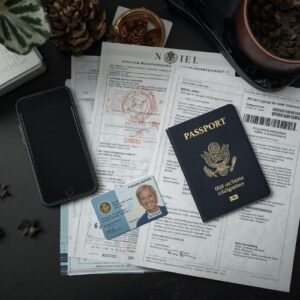
You become suspicious.
So the person sends proof.
An identification card.
A passport.
A military document.
A hospital bill.
A plane ticket.
A bank statement.
A shipping notice.
A business document.
Perhaps a photograph supposedly taken specifically for you.
AI can make these common romance-scam stories more convincing without fundamentally changing them.
The instinct is understandable:
“Why would they have all this documentation if the story weren’t real?”
But documents have never been perfect proof.
Image-editing software existed long before modern generative AI.
AI can make creating and modifying convincing-looking material easier.
If a document matters, verify the underlying claim independently.
Don’t ask the person you’re investigating how to verify their own evidence.
If they give you an email address for their commander, doctor, lawyer, bank manager, shipping agent, or employer, you may simply be contacting another part of the same scam.
Find legitimate contact information yourself.
10. The AI Doesn’t Need to Be Perfect
This point is easy to miss.
A fake photograph doesn’t need to fool a forensic expert.
It needs to fool someone scrolling through Facebook.
A cloned voice doesn’t need to withstand laboratory analysis.
It may only need to make a short phone call feel reassuring.
A manipulated video doesn’t need to survive frame-by-frame inspection.
It may only need to explain why the connection is bad and end after thirty seconds.
A fake document doesn’t need to convince a government official.
It needs to reassure someone who desperately wants the relationship to be real.
Scammers don’t necessarily need perfect AI.
They need good enough AI at the right emotional moment.
Why Romance Scams Are Particularly Vulnerable to AI
Romance fraud has an unusual advantage compared with many other scams.
The scammer has time.
A fake bank warning may need to frighten you within minutes.
A romance scam can develop over months.
During that time, the scammer learns:
what reassures you,
what worries you,
what you want,
what you’re afraid of losing,
and what explanations you’re willing to accept.
The relationship itself becomes part of the persuasion system.
AI can help strengthen the supporting evidence.
But the emotional investment is still doing much of the work.
That’s why focusing only on detecting AI misses the larger problem.
You don’t need to determine whether AI generated a photograph to decide:
“I’m not sending money to someone I’ve never met.”
Can AI Detectors Tell You Whether Someone Is Fake?
Be cautious about relying on any single AI-detection tool.
Detection and generation technologies continue to evolve.
A tool may incorrectly classify genuine material.
It may fail to identify manipulated material.
Images may also have been resized, compressed, edited, screenshotted, or processed by social platforms.
An AI detector can potentially provide another clue.
It shouldn’t become your entire verification strategy.
Otherwise, we’ve replaced:
“The reverse-image search found nothing, so they’re real.”
with:
“The AI detector says it’s real, so they’re real.”
The underlying mistake is the same.
You’re asking one technological test to resolve a human identity question.
So How Do You Verify Someone in the Age of AI?
The answer is less exciting than an AI-detection app.
Use multiple independent signals.
Check Their History
Does the person’s story remain consistent over time?
Jobs.
Locations.
Family.
Age.
Education.
Relationships.
Travel.
Dates.
Contradictions matter.
Search Independently
Search names, photographs, occupations, organizations, phone numbers, and claims without relying solely on information or links the person provides.
Use Reverse-Image Search
It remains useful even though it isn’t definitive.
Have Live Conversations
Phone and video still provide information.
Just don’t treat them as absolute proof.
Ask Natural, Contextual Questions
You don’t need to interrogate someone.
Real relationships naturally produce shared context.
Pay attention when ordinary questions repeatedly create strange explanations or contradictions.
Verify Important Claims Through Independent Sources
If someone says they’re in the military, don’t verify them through the “commander” whose email address they provided.
Stolen military photographs have long been used in military romance scams, but AI creates the additional possibility that the person in the photograph never existed at all.
If someone says they’re hospitalized, don’t automatically trust a “doctor” introduced through their account.
Independent means independent.
Don’t Let Money Become Your Verification Test
Never think:
“I’ll send a small amount and see what happens.”
Sending money doesn’t verify the relationship.
It verifies that you’re willing to send money.
The Strongest Protection Is Surprisingly Low-Tech
AI makes scams technologically more sophisticated.
Your strongest boundary can still be extremely simple:
Don’t send money, cryptocurrency, gift cards, financial information, or account access to someone you’ve never met and independently verified.
You should also take basic steps to protect your personal information online, particularly before someone’s identity has been independently verified.
You don’t need to prove the photograph is AI-generated.
You don’t need to identify the voice model.
You don’t need to expose a deepfake.
You don’t need to win an argument about whether the passport is genuine.
You can say:
“I don’t send money to people I only know online.”
A genuine relationship can survive that boundary.
A financial scam has a much harder time doing so.
What If You’ve Already Sent Money?
Stop sending additional money while you investigate.
Don’t let the amount you’ve already sent become the reason you send more.
Save:
- Messages
- Emails
- Profile information
- Photographs
- Videos
- Voice messages
- Phone numbers
- Usernames
- Payment receipts
- Cryptocurrency addresses
- Documents
Contact the relevant bank, card provider, payment service, or cryptocurrency exchange as quickly as possible.
Tell someone you trust.
And be cautious about anyone who suddenly offers to recover your lost money for an upfront fee.
A recovery scam can target someone immediately after a romance scam.
What If Someone You Love Believes the AI Evidence?
This may become increasingly important.
Imagine telling someone:
“That photo could be AI-generated.”
They respond:
“But we’ve spoken on the phone.”
You say:
“Voices can be cloned.”
They respond:
“We’ve had a video call.”
You say:
“Video can be manipulated.”
At that point, the conversation can become counterproductive.
It may sound as though you’re claiming that nothing can ever be trusted.
Instead, focus on the behavior.
Has the person asked for money?
Have they repeatedly avoided meeting?
Are important parts of their story implausible to verify independently?
Do emergencies seem to happen when the relationship is supposed to move forward?
Are they pressuring your loved one to keep secrets?
Are they introducing investments?
Does questioning the story lead to guilt, anger, or emotional pressure?
You don’t need to prove that every photograph is fake.
You need to help the person recognize the overall pattern.
AI Changes the Evidence — Not the Fundamental Scam
For centuries, scammers have adapted to new communication technologies.
Letters made distance fraud possible.
Postal systems made it scalable.
Email made it cheap.
Social media made it personal.
Dating platforms made romantic targeting easier.
Messaging apps made relationships constant.
Cryptocurrency created new ways to move money.
Now AI can make false identities more convincing.
But underneath the technology, the romance scam remains remarkably familiar.
Someone gains your trust.
A relationship develops.
Something prevents the future you’ve been promised.
A problem appears.
And eventually, you are asked to solve it.
Usually with money.
So don’t spend all your energy trying to become an expert at spotting AI-generated faces.
Learn to recognize the relationship pattern too.
Traditional catfishing often relies on stealing someone else’s identity. Generative AI adds the possibility of creating an identity that never existed.
Because the most convincing fake photograph in the world still doesn’t explain why someone who supposedly loves you needs you to buy gift cards, transfer cryptocurrency, pay their military leave, rescue their business, or repeatedly finance a future that never seems to arrive.
AI can change what the scam looks and sounds like.
It doesn’t change what the scam needs from you.
Frequently Asked Questions About AI Romance Scams
Can Scammers Use AI to Fake a Video Call?
AI can be used to create or manipulate video, including changing a person’s appearance or producing deepfake content.
That doesn’t mean you should assume every unusual video call is fake. Live video is still useful when verifying someone you’ve met online, particularly when combined with other checks.
The important distinction is that seeing someone on video isn’t necessarily the same as proving their identity.
Pay attention to the entire relationship. Does their story remain consistent? Can important claims be independently verified? Are they repeatedly unable to meet in person? Does money eventually become part of the relationship?
A video call should be one piece of evidence rather than the only evidence you trust.
Can Romance Scammers Clone Someone’s Voice With AI?
AI technology can generate and imitate human voices, so hearing someone’s voice shouldn’t be treated as absolute proof of identity.
A voice may sound convincing without proving that you’re speaking to the person shown in the profile photographs.
This is particularly important when a phone call is being used to overcome doubts you already have about someone’s identity.
Instead of asking only, “Did I hear their voice?” ask whether their identity remains consistent across multiple independent sources.
Can Reverse-Image Search Detect AI-Generated Profile Photos?
Not necessarily.
Reverse-image search is particularly useful when a scammer has stolen photographs that already exist elsewhere online.
An entirely AI-generated person may have no original photograph for a reverse image search to find.
You should still reverse-image search suspicious photographs because many romance scammers continue to use stolen images.
Just don’t make the opposite assumption:
No search result doesn’t mean the photograph is genuine.
How Can I Tell if a Dating Profile Photo Is AI-Generated?
Sometimes AI-generated images contain visual inconsistencies, but relying on them can create a false sense of security.
AI image generation continues improving, and obvious clues that worked with older generations of the technology may become less reliable.
Instead of trying to become an expert at identifying synthetic faces, investigate the identity behind the photograph.
Look at the person’s history, search independently for their claims, use reverse-image search, have live conversations, and pay attention to contradictions.
The most important question isn’t necessarily:
“Was this photograph generated by AI?”
It’s:
“Can I independently establish that this person is who they claim to be?”
Can AI Write Romantic Messages for a Scammer?
Yes. Generative AI can produce, rewrite, translate, and personalize text.
That means spelling and grammatical mistakes are becoming less useful for identifying scams.
Someone who doesn’t speak English fluently can potentially use AI to produce natural-sounding English messages.
AI can also help summarize previous conversations or generate messages based on information already shared.
A beautifully written message may be sincere.
But good writing doesn’t verify the identity of the sender.
Can a Romance Scammer Use AI to Remember Things I’ve Told Them?
AI tools can summarize and organize information from conversations, which could make it easier for someone managing multiple relationships to keep track of personal details.
That matters because remembering your children’s names, your birthday, your job, or something you said weeks ago can make a relationship feel deeply personal.
It may genuinely be personal.
But remembering details should not be treated as proof that the person’s identity or intentions are genuine.
Evaluate what they do, not simply how attentive their messages appear.
Are AI Romance Scams Only Found on Dating Apps?
No.
Romance scams can begin anywhere people communicate online.
That includes dating apps, Facebook, Instagram, messaging platforms, email, online communities, games, and other social spaces.
The romantic relationship may not even begin immediately. Someone can first approach you as a friend, a fellow group member, a professional contact, or someone who shares one of your interests.
The conversation may then gradually become romantic.
What Should I Do if Someone Sends Me an AI-Generated Photo?
An AI-generated photograph doesn’t automatically tell you why someone sent it.
But if someone is presenting an artificial photograph as a genuine picture of themselves, you have a serious reason to question their identity.
Don’t send money while trying to resolve the situation.
Save the photograph and your conversations, investigate other claims independently, and don’t rely on additional photographs from the same person for verification.
Someone suspected of creating a false identity shouldn’t be allowed to become the sole source of evidence proving that identity.
Can AI Detectors Prove That a Dating Profile Is Fake?
No single AI detector should be treated as definitive proof.
Detection tools can make mistakes, and generated content continues to evolve. Images may also be edited, compressed, resized, or otherwise changed before being analyzed.
An AI detector can potentially provide another clue, but it shouldn’t replace broader identity verification.
Otherwise, you’re still trusting one technological result to answer a much larger question about who you’re actually talking to.
How Do I Protect Myself From AI Romance Scams?
You don’t need sophisticated technology to establish strong boundaries.
Verify important claims independently. Use reverse-image search as one tool rather than definitive proof. Have live conversations. Pay attention to inconsistencies and repeated excuses for why someone can’t meet.
Most importantly, don’t send money, cryptocurrency, gift cards, financial information, passwords, authentication codes, or account access to someone whose identity you haven’t independently established.
AI can make a false identity look more convincing.
It can’t force you to finance it.
Rickard


What do you think about the article you've just read? Please tell me below.